Skip to content
LUCA OS

The organization twin

The whole company on one screen. Every action waits for a yes.

The CEO sees the company on one dashboard and gives commands in plain words. Each department drafts its part of the work. The right person approves it, and only then does anything leave the company.

Example company: Xperiaa. The screens show sample (demo) data, not a real company’s books.

Screen by screen

What the CEO and the team see
Step 1

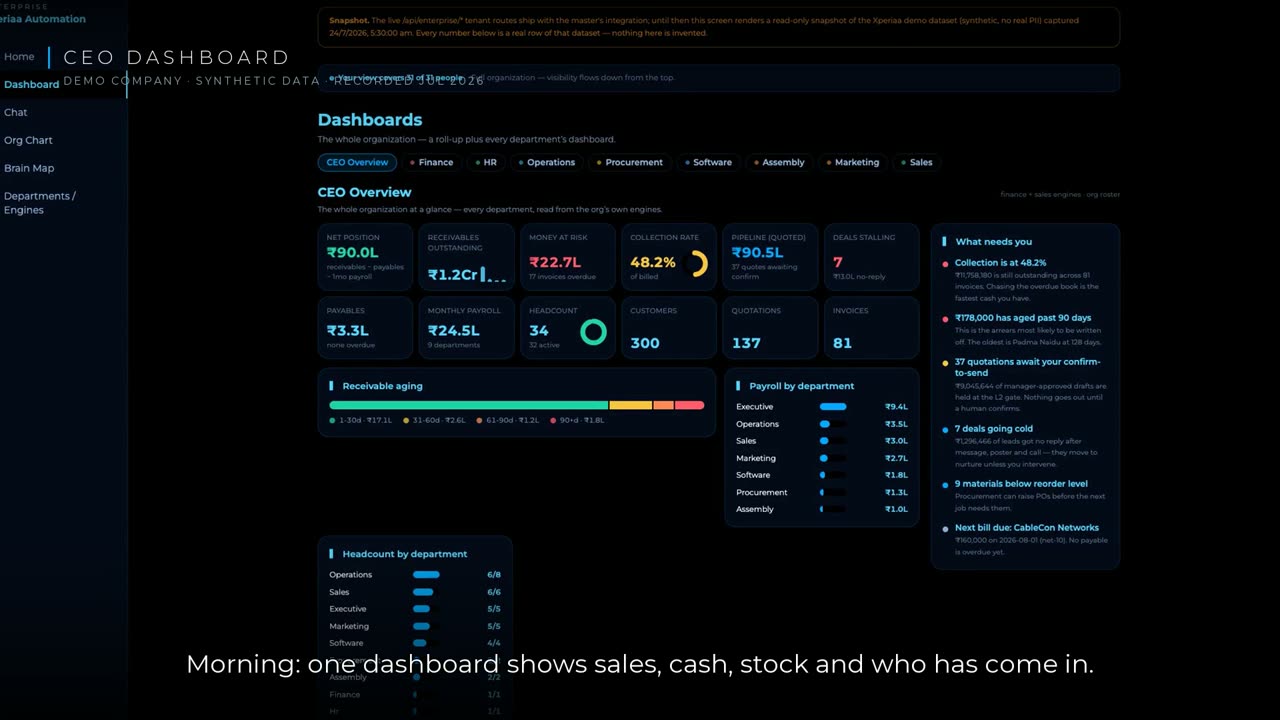
The CEO’s dashboard
When the CEO signs in, the company’s own page opens. Each tile shows a number read from the company’s own books, and each tile opens the department behind it. One search box searches the books. Nothing on this page is typed in by hand.

Step 2

Commands (the CEO asks, the twin drafts the work)
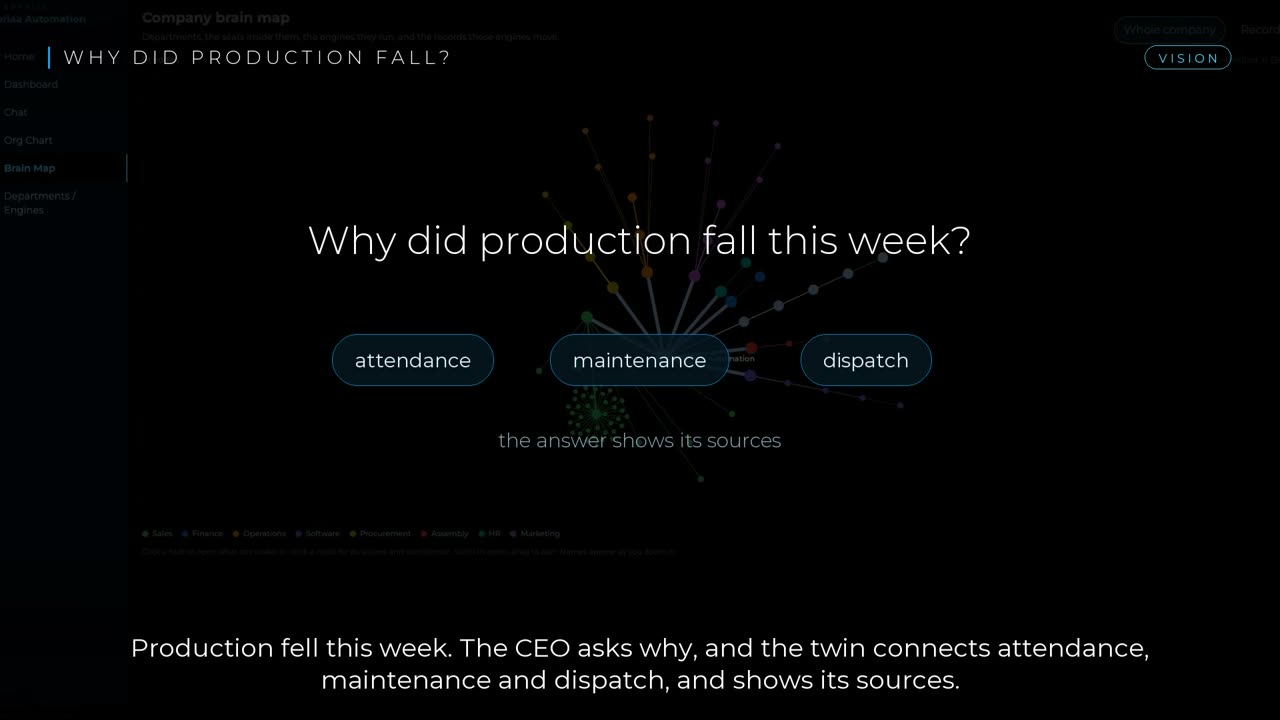
The CEO asks in plain words, the way she would ask a manager. The twin answers from the company’s own records and drafts the work that is needed. A draft is only a draft. Nothing leaves the company until the right person approves it.

Step 3

Departments

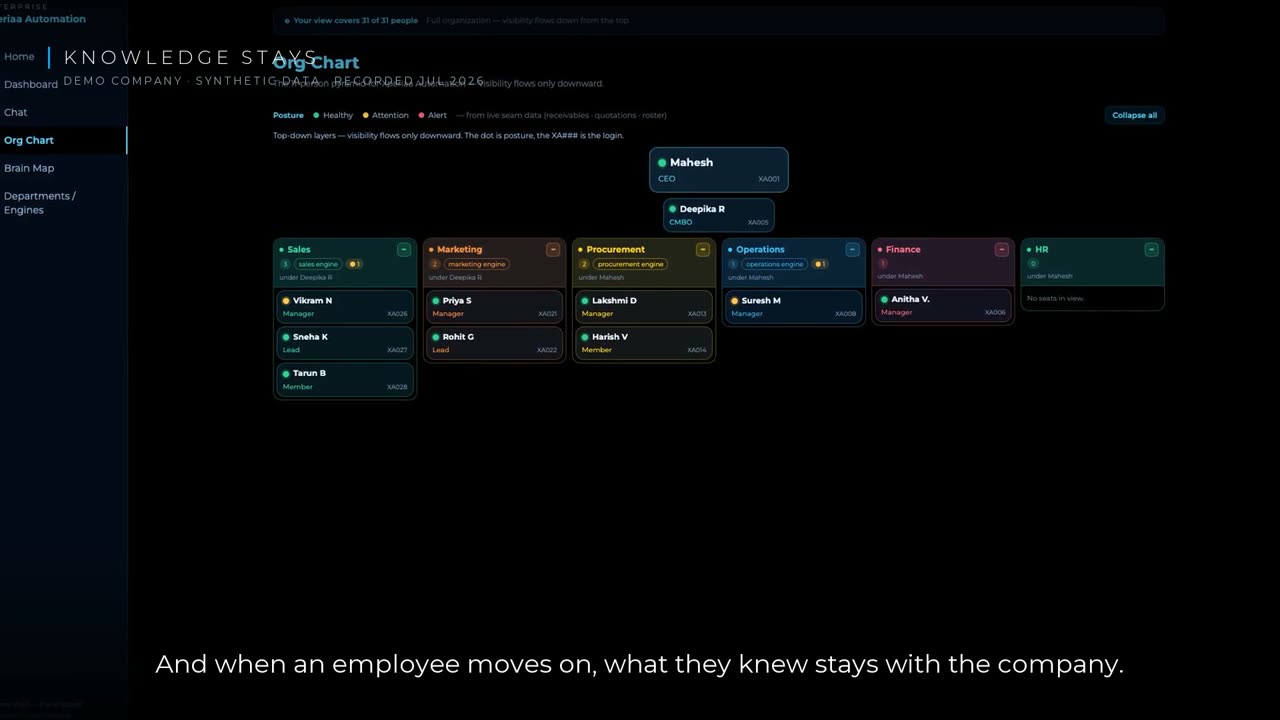
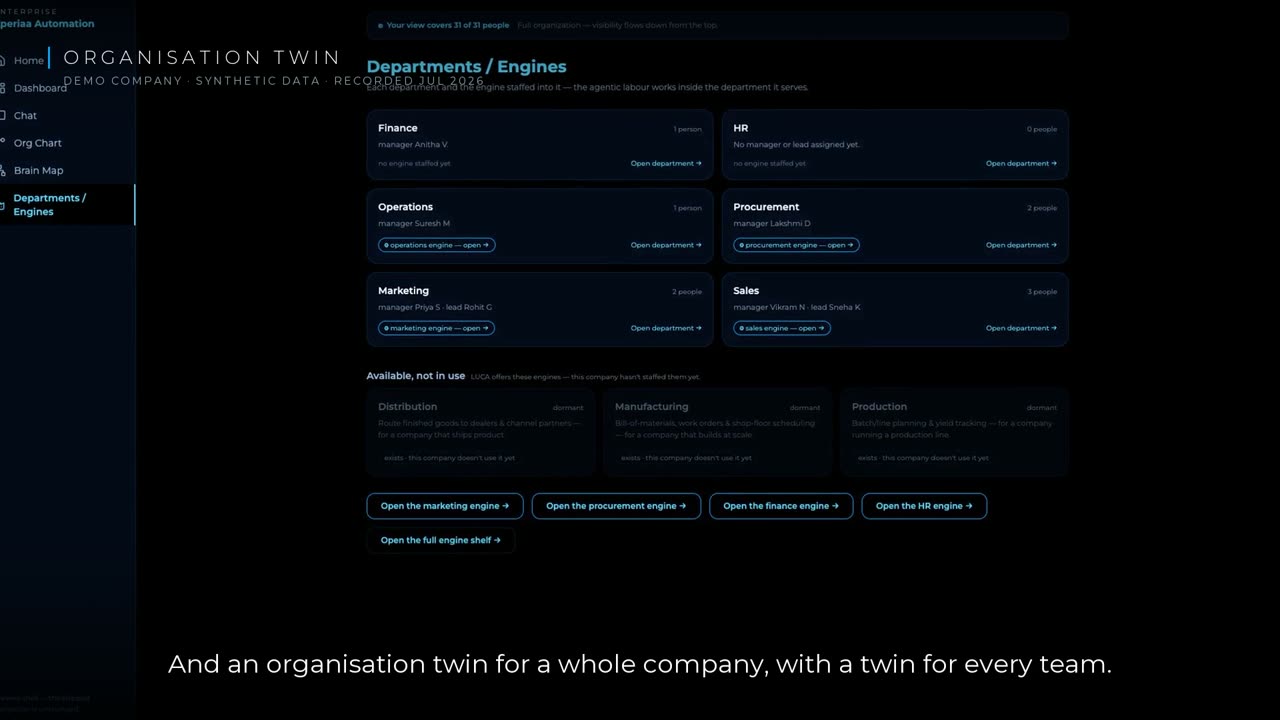
Each department has its own working engine: marketing, sales, operations, procurement, finance and HR. Each one keeps its own records and drafts its own work. The CEO can open any department and see what is waiting.

Step 4

People, roles and what each one can see
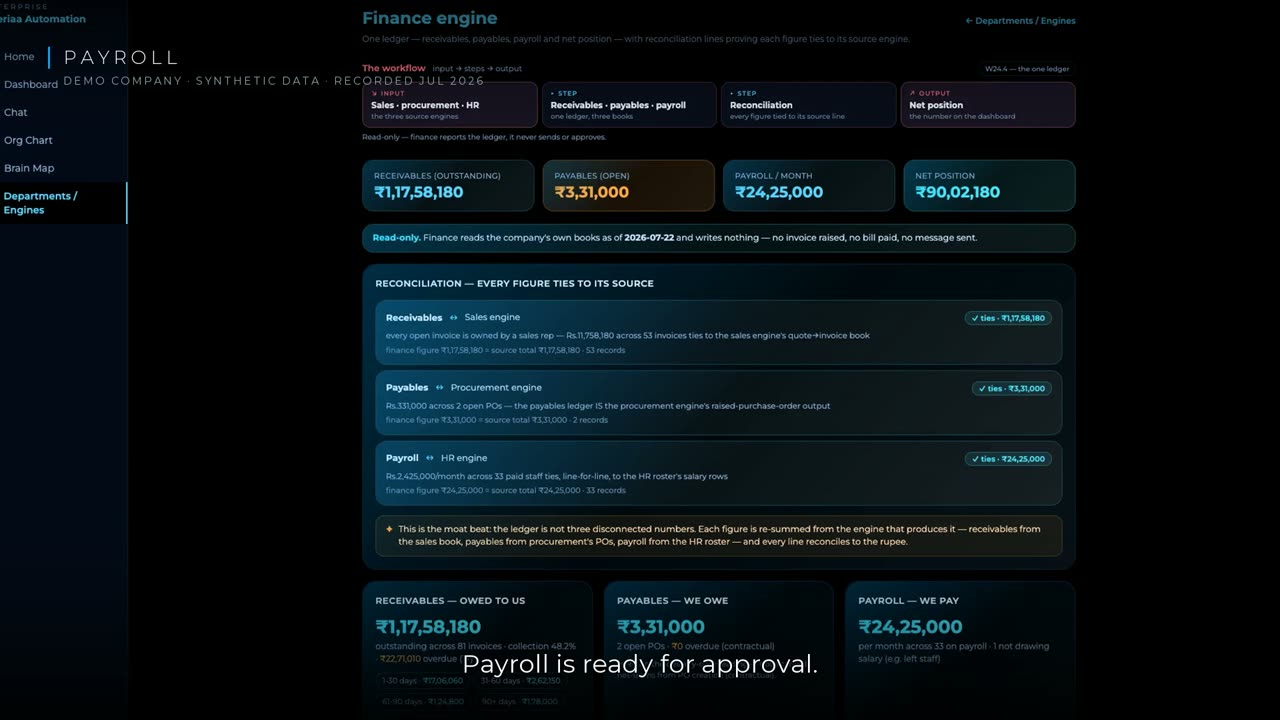
Each person joins by an invitation and gets a seat. The seat decides what that person can see and do. For example, the marketing head does not see payroll. The walls hold inside the same company.

Step 5

Approvals (nothing goes out without a yes)

Every message, email and quotation the twin prepares waits in one list of drafts. The person named as approver reads it and taps Approve. Only then is it sent. Each step leaves a record of who approved what, and when.

How a command travels

From the CEO’s words to work that is done

  1. Step 1

    The CEO gives a command

    In plain words.

  2. Step 2

    The twin works out the work

    Which department each part belongs to.

  3. Step 3

    Each department drafts

    Its own part, as a draft.

  4. Step 4

    The right person approves

    Reads it and says yes.

  5. Step 5

    Done

    Only now does it go out.

  6. Step 6

    The CEO’s dashboard shows it

    With a record of every step.